How To Know When It’s Time To Switch Your Phone Plan
Key Takeaways
- It may be time to switch your phone plan if coverage is unreliable, your bill keeps increasing, or customer support consistently falls short of expectations.
- Reviewing your actual usage, backing up your data, and understanding number porting can make switching carriers smooth and stress-free.
- Flexible, no-contract plans with transparent pricing and network choice can help you save money without sacrificing coverage or reliability.
Most people do not switch phone plans because they love change. They switch because something feels off.
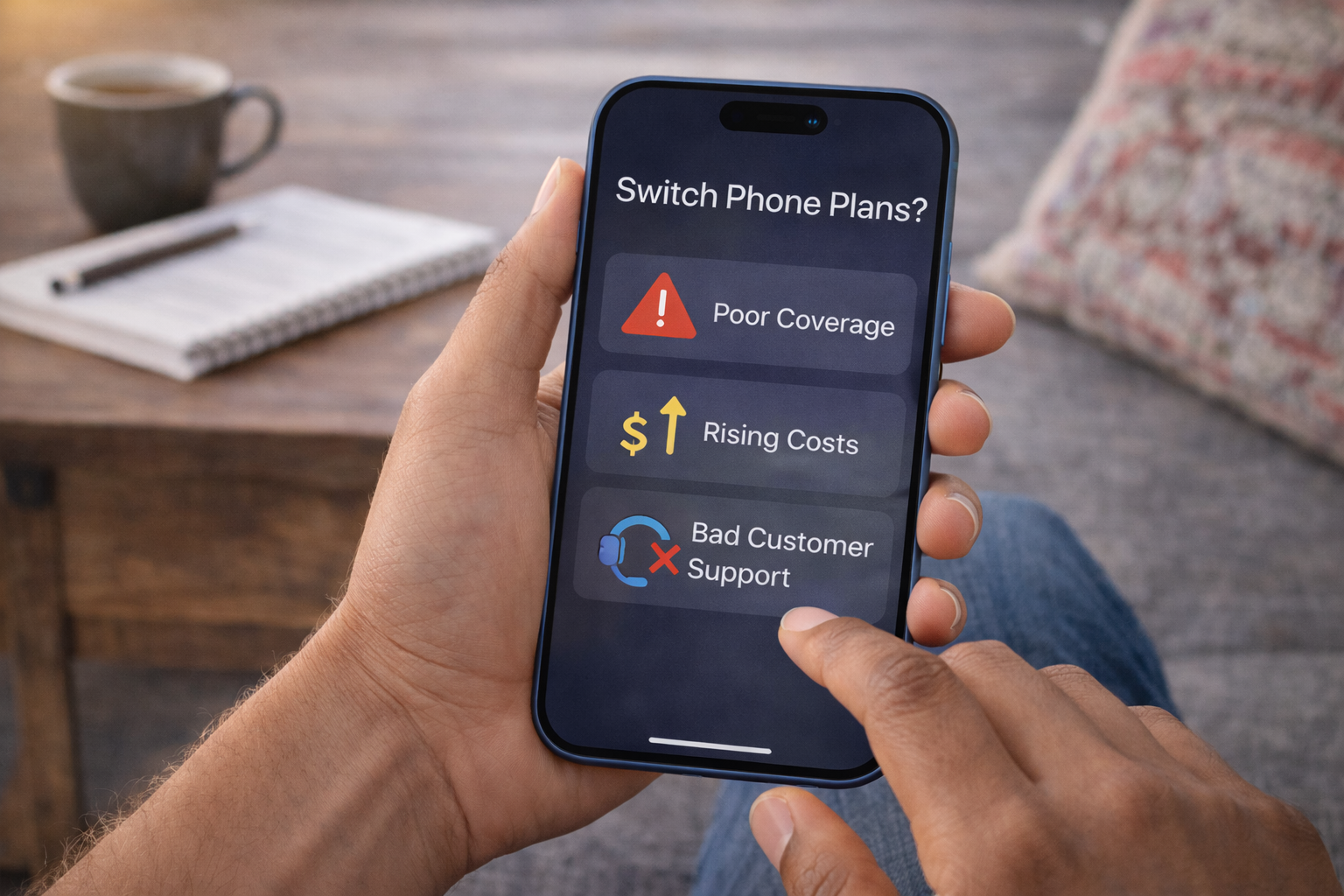
The bill keeps creeping up. Calls drop at the worst moments. Customer support feels impossible to reach. And somehow, you are still paying more every month without seeing any real improvement.
If your phone plan feels more frustrating than helpful, that is not something to ignore. Knowing when to switch can save you money, improve your coverage, and give you back a little peace of mind.
At RedPocket, we believe switching should feel empowering, not overwhelming. Let’s break down the clearest signs it might be time for a change and how to do it the smart way.
Evaluate Your Current Network Coverage and Quality
Your phone plan should work where your life happens. When it doesn’t, it’s usually the first red flag.
Network coverage simply means the areas where your carrier can reliably deliver calls, texts, and data. If you are dealing with dropped calls, slow data, or dead zones in places you visit every day, your plan is no longer doing its job.
Start by paying attention to patterns. Do calls drop at home, at work, or on your commute? Does data crawl in neighborhoods you visit often? These are signs that your current network may not be the best fit for your location.
Tools like coverage maps and network checkers can help confirm what you are already experiencing. This is also where flexibility matters. RedPocket customers can use CoverageGenius to choose the network that works best in their area instead of being locked into one option.
Review Your Monthly Costs and Hidden Fees
A plan that looks affordable upfront can quietly become expensive over time.
Hidden fees are charges not clearly reflected in the advertised price. These might include extra service fees, unused add-ons, or gradual rate increases you did not agree to. The best way to spot them is to review a few recent bills and compare the advertised plan price to what you actually paid.
Make a simple list. Write down your base plan cost, then add taxes, fees, and any extras you do not use. Many people discover they are paying for unlimited data they do not need or features they never touch.
RedPocket’s Lock in Low Pricing is designed to eliminate this guesswork. What you sign up for is what you pay, month after month, without surprise increases.
Assess Your Customer Service Experience
Price matters, but support matters too, especially when something goes wrong.
Good customer service means being able to get help without jumping through hoops. Slow responses, repeated transfers, or unresolved issues are all signs that your provider is not prioritizing your experience.
Think back to your last support interaction. Did it solve the problem? Did it take longer than it should have? If getting help feels stressful every time, that frustration adds up quickly.
Reliable providers offer clear help options, useful self-service tools, and support that actually resolves issues. That support can make a big difference when you are activating a phone, switching networks, or troubleshooting a problem.
RedPocket offers a 2-minute care promise, making sure that you can reach customer care in two minutes or less. This eliminates the barrier of waiting on the phone for what feels like hours to get the support you need.
Back Up Your Data Before Switching
Before making any changes, protect what matters most on your phone.
A data backup is simply saving copies of your contacts, photos, messages, and important files so nothing is lost during the switch. This step is easy to overlook, but it is essential.
Most phones allow automatic backups through cloud services or local storage. Take a few minutes to confirm that contacts, photos, and messages are safely backed up. A quick checklist can help ensure nothing gets missed.
Once your data is secure, switching becomes far less stressful.
Transfer Your Phone Number Seamlessly
One of the biggest fears when it comes to switching is losing your phone number. The good news is that this almost never happens.
Number porting is the process that allows you to move your existing phone number to a new carrier. It is regulated and widely supported. In most cases, starting the transfer with your new provider automatically cancels your old service once the port completes.
To prepare, keep your current account active, gather your account number and PIN, and double-check your contact information. RedPocket supports easy number transfers, and most ports complete quickly with minimal disruption.
Maximize Benefits From New Plan Features and Bonuses
Switching plans is not just about paying less. It is also about getting more value from features that actually fit your life.
Take time to review what your new plan includes. This might be family discounts, hotspot access, international calling, or flexible data options. Compare those features to how you actually use your phone.
A simple feature comparison can reveal which perks matter and which ones are just noise. Many people find that switching to a value-focused MVNO unlocks better flexibility and access to major networks without paying premium prices.
Frequently Asked Questions
How can I tell if my phone plan includes features I do not use?
Review your monthly bill and compare the included features with your real usage. If you mostly use Wi-Fi or never use certain add-ons, a different plan could save you money.
What should I do to protect my data before switching carriers?
Back up contacts, messages, photos, and important files to a cloud account or local storage before starting the switch.
Can I switch carriers if I still owe money on my current device?
Yes. You may need to pay off the remaining balance first or explore whether your new carrier offers options for switching with an unpaid device.
Sources:
Porting: Keeping Your Phone Number When You Change Providers | Federal Communications Commission
How to back up your iPhone or iPad with iCloud | Apple Support
What Is Customer Service, and What Makes It Excellent? | Investopedia
