

Key Takeaways
- Understanding your usage, coverage, and plan details upfront helps you avoid surprise fees and choose a mobile plan that truly fits your lifestyle.
- Watching for hidden charges, monitoring data limits, and staying proactive with your carrier keeps your monthly bill predictable and fair.
- RedPocket’s transparent pricing, flexible networks, and no-contract freedom make it easier to stay connected without ever paying for what you don’t need.
Ever open your phone bill and feel that quiet panic when the total looks nothing like what you expected? We get it. Between hidden fees, data overages, and sneaky add-ons, even “affordable” plans can balloon fast.
At RedPocket, we believe staying connected shouldn’t mean decoding fine print or overpaying for things you don’t use. Picking the right mobile plan is about matching your real habits (how much you call, stream, scroll, and travel) to a plan that actually fits your life.
In this guide, we’ll help you do exactly that. You’ll learn how to understand your usage, spot hidden charges before they show up, compare networks where it matters, and find affordable phone plans that give you freedom, not frustration.
Think of it as the insider’s playbook to choosing a plan you’ll feel good about month after month.
Assess Your Mobile Usage Needs Before Choosing a Plan
The easiest way to avoid paying for things you don’t need is to understand how you actually use your phone. Most people pick a plan based on what sounds “safe” — usually unlimited everything — but the reality is that your daily habits tell the real story.
Taking a few minutes to assess your mobile usage can reveal how much data, talk time, and texting you really need, helping you pick an affordable plan that fits your life instead of draining your budget.
Start by thinking about your typical week. How often do you stream music or videos on cellular data? Do you work remotely and rely on hotspot connections, or are you mostly on WiFi at home or work?
If you’re connected to WiFi most of the day, a smaller data plan could easily meet your needs. Someone who scrolls social media on breaks or uses GPS for short drives will use far less data than someone streaming movies on the go.
Use this quick checklist to get a sense of your habits before choosing a plan:
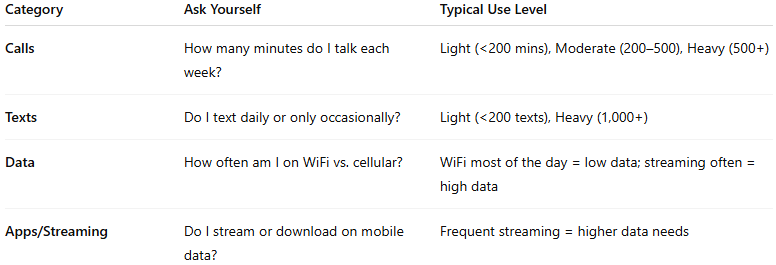
Once you understand your usage, match it to the right plan type. RedPocket offers flexible, affordable options built for every kind of user.
If you’re a light data user who spends most of the day on WiFi, the Essentials Plan gives you unlimited talk and text plus 3GB of data for just $10/month, a perfect minimalist setup. If you’re always on the go or using hotspot data for work, the Premium Plan offers 50GB of 5G premium data and a hotspot for only $30, with unlimited data quantities at up to 4G LTE speeds beyond 50GB.
If you already have a phone you love, you can save even more by bringing your own device (BYOD). It simply means transferring your existing phone and number to a new carrier instead of buying new hardware, keeping your setup simple, sustainable, and affordable.
By looking at your habits first, you’re choosing smarter spending. A few honest answers about your usage can be the difference between paying for “unlimited” you’ll never use and finding a plan that fits like it was built for you.
Compare Network Coverage To Ensure Reliable Service
Even the best plan can fall short if your signal doesn’t hold up where you actually live, work, or travel. Network quality isn’t the same everywhere; some carriers perform better in cities, others in rural or coastal areas. That’s why comparing wireless coverage before committing to a plan is one of the smartest moves you can make.
Start with the basics: check coverage maps for your area. Most carriers publish interactive maps online where you can zoom in to your ZIP code and see 5G and LTE strength. Take it a step further and ask around; friends, coworkers, or neighbors often give the most honest insight into cell signal reliability.
RedPocket makes this step easier by giving you access to three of the nation’s largest 5G networks (AT&T, T-Mobile, and Verizon) through one account. That means you can choose the network that performs best in your area without being locked into a single carrier. It’s ideal if you split time between cities or travel often, since you can switch networks monthly using your account settings.
If you’re changing carriers, try a short trial period first. Use your existing phone to test coverage strength at home, your workplace, and anywhere you spend time daily.
Reliable coverage is the foundation of a good plan. By checking your local network strength upfront, you can skip the frustration of dropped calls and slow data, and feel confident that your affordable plan will actually perform wherever you go.
Understand Plan Pricing and Watch for Hidden Fees
Sometimes, what looks like a great deal upfront can become expensive once the bill arrives. That’s because not all plans are as straightforward as they seem. Many include hidden charges or extra fees buried in the fine print that sneak onto your statement month after month.
Hidden fees are unadvertised or unclear costs added to your bill, such as activation, administrative, or data overage charges. These charges often appear small on their own but can significantly raise your total over time, especially if they’re recurring or usage-based.
To stay ahead, look out for the most common culprits:
- Activation fees: One-time setup charges when you start a new plan or activate a device.
- Overage charges: Extra costs for exceeding your plan’s data limit, often around $10 per 2GB of extra data.
- Early termination fees: Penalties for ending a contract before it’s complete.
- Surcharges and taxes: Carrier-specific or regulatory fees that aren’t always included in the advertised price.
- Insurance or feature add-ons: Optional services that may auto-renew without you realizing it.
Before you sign up, take a moment to read the terms and conditions, especially the sections labeled “fees” or “additional costs.” If anything feels unclear, ask for a breakdown in writing. Some carriers use language like “starting at” or “plus applicable fees” to mask real pricing differences.
When comparing options, look for plan transparency. Carriers like RedPocket use clear, flat-rate pricing with no hidden fees, so what you see is exactly what you pay. That’s the difference between an “intro offer” that disappears after three months and a plan that actually stays affordable long-term.
Analyze Data Limits and Options to Prevent Overage Charges
Data is the heartbeat of every mobile plan, and one of the biggest drivers of surprise costs. Most unexpected charges come from using more data than your plan allows, so learning how to read, track, and manage your data usage can save you from those frustrating end-of-month overage fees.
A data cap is the maximum amount of high-speed mobile data included in your plan each month. Once you hit that limit, your carrier may slow your speeds or start charging extra for every additional gigabyte used.
An overage charge is exactly that: an added fee for exceeding your plan’s data allowance. Some carriers charge around $10 per 2GB of extra data, which adds up quickly if you’re streaming or hotspotting on the go.
The best way to stay in control is to set data alerts through your phone’s settings or your carrier’s app. These notifications help you track how close you are to your limit and can even pause mobile data automatically once you reach your cap. As a rule of thumb, set data caps on your mobile plan to avoid unexpected overage charges and control usage.
Understanding the difference between limited-data and unlimited data plans also helps you avoid surprise costs. Limited plans are usually cheaper upfront, perfect for light users who spend most of their time on WiFi. But if you frequently stream, work remotely, or travel, an unlimited plan is often worth it — no guessing, no overages, and no slowed speeds.
Choosing the right tier is about matching your habits, not chasing the highest number. If you only use a few gigabytes a month, a lower data plan can save you hundreds a year. But if you’re constantly streaming, tethering, or multitasking on mobile, a higher data cap (or true unlimited plan) will protect you from overage stress and keep your speeds consistent.
Check Contract Terms and Avoid Early Termination Penalties
Before you commit to a new plan, take a close look at the fine print around contracts and cancellation policies. These details can make or break your ability to switch carriers freely, and they’re often where costly surprises hide. The biggest difference comes down to contract vs. no-contract plans.
Contract Plans
Contract (or postpaid) plans typically lock you in for one to two years. They sometimes promise stable pricing or device upgrades, but that stability comes with strings attached. Leaving early can trigger an early termination fee, a penalty carriers charge if you cancel before your contract ends, sometimes $200 or more, depending on how many months are left.
No-Contract Plans
In contrast, no-contract prepaid plans give you flexibility. You pay upfront for each month, no credit check or cancellation penalty required.
If you ever want to change networks, upgrade your phone, or pause service, you can do it on your terms. That’s one of the biggest advantages of RedPocket: transparent, prepaid options with no hidden exit fees and no pressure to stay longer than you want.
Here’s a quick comparison of how the two structures differ:
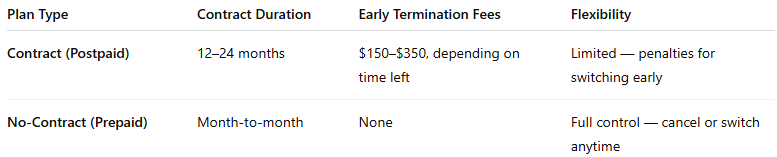
When it comes to contract terms, freedom matters. A lower monthly rate doesn’t mean much if you’re stuck paying to leave later. Choosing a prepaid or no-contract option helps you stay in control of your plan, your budget, and your peace of mind.
Use Tools and Resources to Monitor Your Usage Regularly
Even with the right plan, it’s easy for small habits to creep up and change your monthly total. The best way to prevent that? Keep an eye on your usage. Regular check-ins can help you spot data spikes, forgotten add-ons, or even billing mistakes before they turn into extra charges.
Review Your Bill
Start by reviewing your monthly bill line by line. Look for unusual data jumps, unfamiliar fees, or new services you didn’t authorize. Many smartphones and carriers now include data dashboards where you can see exactly how much data, talk time, and text usage you’ve used each cycle.
Create and Use Tools
If you’re someone who likes structure, try setting up simple systems to help. Carrier apps can send mobile plan alerts when you near your data cap. You can also track patterns with a spreadsheet, or use free tools like Airtable or AI chatbots to compare plans and automate reminders.
Self-Audit
It’s also smart to schedule a quick self-audit every few months, especially after you change devices or add new lines. Spending just ten minutes reviewing your usage can prevent months of unnecessary overages or underused features.
Staying proactive doesn’t have to be complicated. The more familiar you are with your usage and billing, the easier it is to make quick, informed adjustments, and the less likely you are to ever be surprised by your phone bill again.
Communicate With Your Carrier To Clarify Charges
If something on your bill doesn’t make sense, don’t ignore it — ask. Staying proactive with your carrier can stop small issues from snowballing into months of overpayments. A quick call or chat can often clear up confusion, reverse a mistaken charge, or even uncover better plan options you didn’t know existed.
When in doubt, follow this golden rule: Talk to your mobile carrier to understand pricing and ask about potential price increases.
Start by reviewing your most recent statement line by line. If you see a charge you don’t recognize (like premium SMS fees, app subscriptions, or small third-party costs), it could be mobile cramming, which happens when outside services sneak unauthorized charges onto your bill. Dispute these immediately and ask your carrier to block future third-party billing.
When it comes to bill negotiation, stay calm, polite, and informed. Gather your previous bills and note any long-term loyalty, unused add-ons, or unexpected price jumps.
Most carriers — including RedPocket — offer live, human support and are open to plan adjustments when you point out legitimate billing concerns. You can often switch to a lower-cost tier or remove unused features right on the spot.
A quick five-minute conversation can be the difference between feeling frustrated and feeling heard. Clear communication keeps you in control of your account and helps build a relationship with a provider that values transparency as much as you do.
Stay Updated on Plan Changes and Mobile Industry Trends
Your phone habits evolve, and so does the mobile industry. Carriers frequently adjust prices, coverage, and plan perks, which means a deal that worked for you last year might not be your best fit now. Staying aware of mobile plan updates ensures you never pay for a plan that’s outgrown your needs.
Set a reminder to revisit your plan details every few months, or at least once a year. Even existing customers can face small carrier plan changes like new fees, throttled speeds, or expired discounts. Checking early gives you time to compare and switch before those changes affect your bill.
It also pays to follow wireless industry trends. Subscribe to newsletters, browse comparison sites, or follow tech blogs that track new features. RedPocket reviews these shifts regularly to keep its plans competitive, transparent, and up-to-date with what customers actually need.
A few minutes of research each season can translate to real savings. Plans evolve, and your life does too. By staying curious, comparing often, and keeping an eye on the fine print, you’ll always have a plan that works as hard and honestly as you do.
Frequently Asked Questions
How can I spot hidden fees on my phone bill?
Hidden fees often appear as small extra charges labeled “administrative,” “regulatory,” or “data overage” fees. Always check the itemized section of your bill for unfamiliar costs and ask your carrier to explain any line item you don’t recognize.
Do unlimited plans really mean unlimited data?
Not always. Most unlimited plans include unrestricted data but may slow your speed after a certain usage threshold — a process known as throttling. Review your plan’s fine print to understand when speed limits apply.
What is mobile cramming, and how do I prevent it?
Mobile cramming is when unauthorized third-party services add charges to your bill without permission. You can prevent it by reviewing your bill each month, disputing unfamiliar fees immediately, and asking your carrier to block third-party billing.
Sources:
Best Red Pocket Plans (2025) | YourNavi
Best Cellphone Plans 2025 | Compare Top Mobile Phone Plans and Carriers | CNET
5 Tips to Avoid Mobile Bill Shock | Elite Group
How to avoid price increases on your cellphone bill | Allconnect.com